The Two Mrs Abbotts

312pp
ISBN 9781903155943
This is the third book in a trilogy. In the first, Miss Buncle’s Book (1934), Miss Buncle, gloriously, wrote a novel about the village she lived in and then had hastily to depart because the true identity of ‘John Smith’, the author, was about to be revealed. In Miss Buncle Married (1936), she marries her publisher and leaves Hampstead for Wandlebury, a village within commutable distance of London. This one, The Two Mrs Abbotts, starts with one of the characters in Miss Buncle’s Book arriving in the village to give a talk for the Women’s Institute and to stay with Mrs Abbott, not knowing that it is her old friend Miss Buncle, mother by now of two children. And after that there is the usual intensely readable round of events, none of them earth shattering, none of them pertaining to ‘great literature’, but the novel is wonderfully enjoyable and although perhaps not quite as witty and fun as Miss Buncle’s Book, it is a very good and entertaining read.
Also the details about daily life in the war are interesting, and in this respect The Two Mrs Abbotts can join Persephone’s collection of World War II books. Thus the quotation on the book's flap describes the young Mrs Abbott, Jerry, being suddenly upset because her handyman gardener is sitting in the harness room having a comfortable supper, whereas every other man she knows is overseas. ‘”No,” said Jerry, “No, Rudge, it won’t do. If you can get exemption that’s all right – that’s your affair not mine – but I can’t keep you here… Why should you be exempted? I’m probably quite mad – but I just can’t bear it.”’
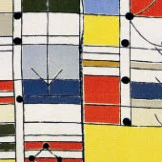
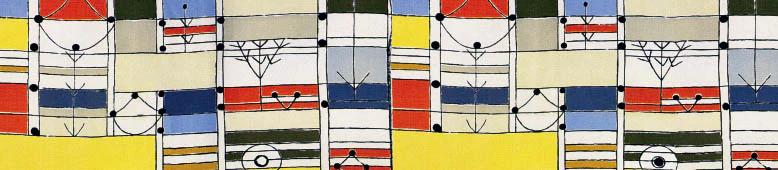
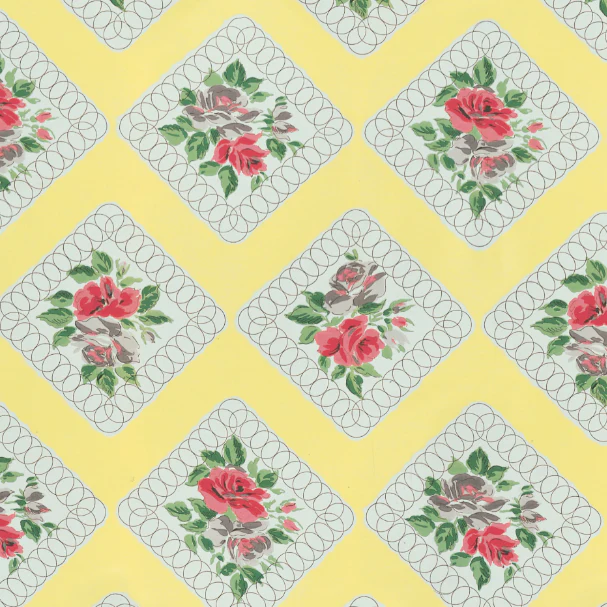
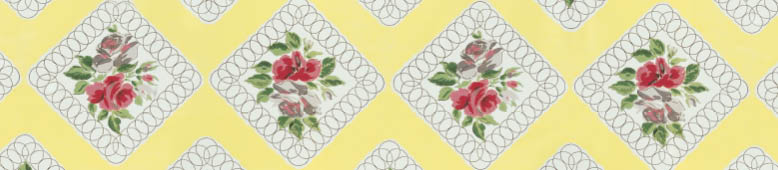
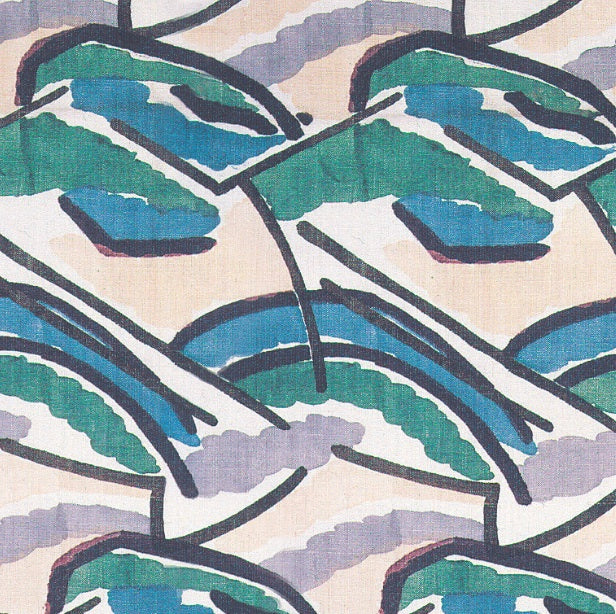
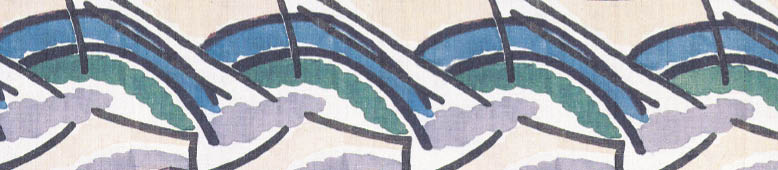
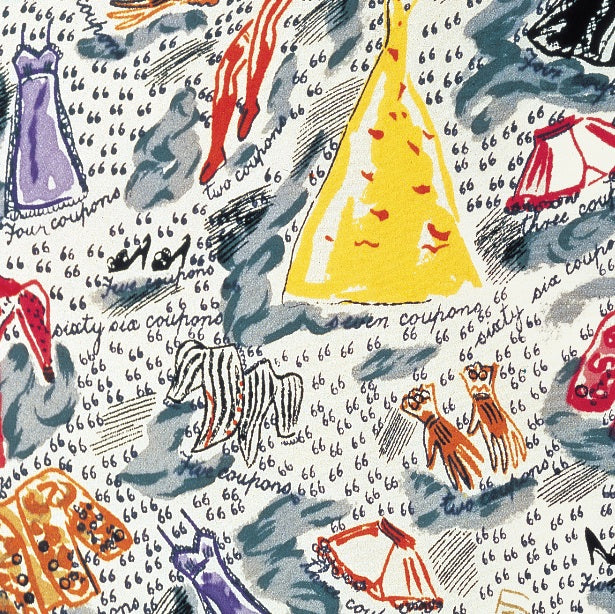
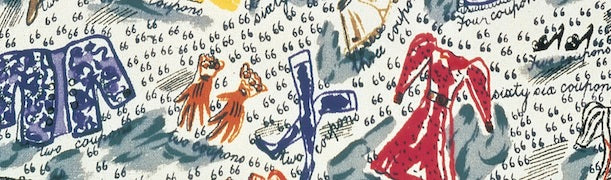
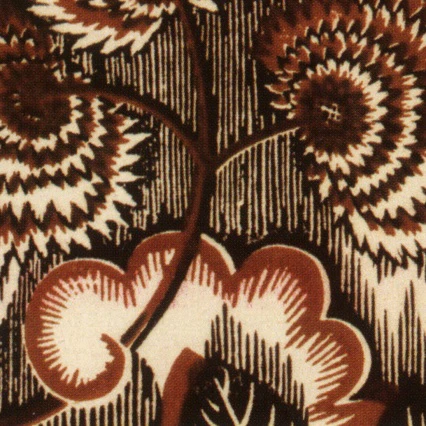
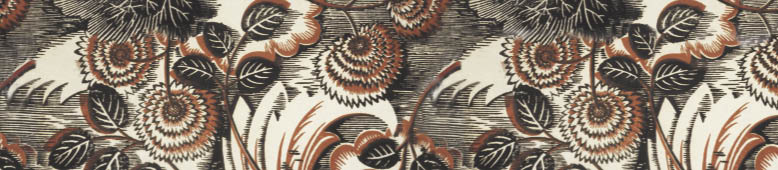
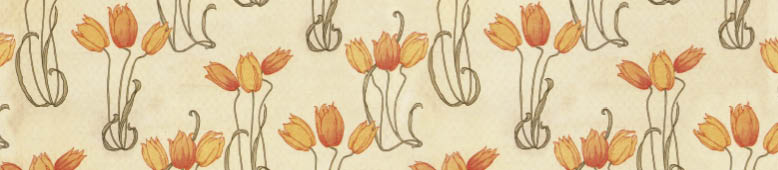
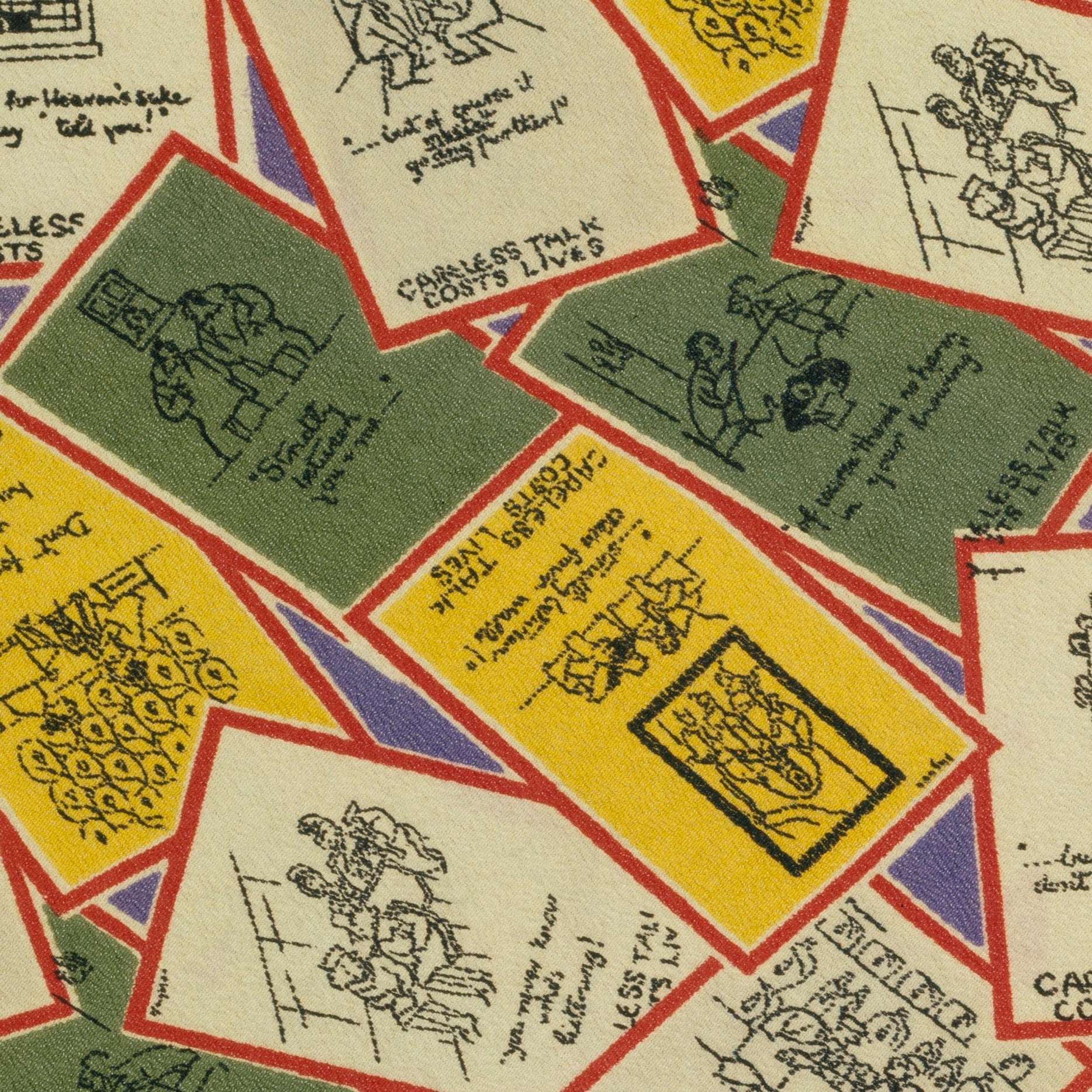
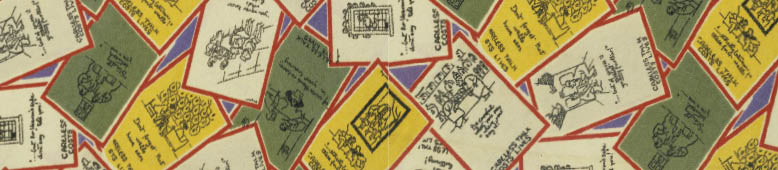
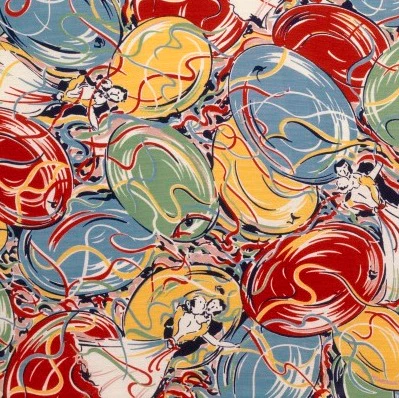
And this is why the fabric used on the endpapers is especially appropriate – it is 1942, the year the book was written, and is called ‘Last Waltz’.
Endpaper
Endpapers taken from 'Last Waltz', a 1942 printed cotton dress fabric by Tootal, Broadhurst, Lee & Co
Picture Caption
'Pauline Waiting', 1939 by Sir James Gunn
312pp
ISBN 9781903155943
This is the third book in a trilogy. In the first, Miss Buncle’s Book (1934), Miss Buncle, gloriously, wrote a novel about the village she lived in and then had hastily to depart because the true identity of ‘John Smith’, the author, was about to be revealed. In Miss Buncle Married (1936), she marries her publisher and leaves Hampstead for Wandlebury, a village within commutable distance of London. This one, The Two Mrs Abbotts, starts with one of the characters in Miss Buncle’s Book arriving in the village to give a talk for the Women’s Institute and to stay with Mrs Abbott, not knowing that it is her old friend Miss Buncle, mother by now of two children. And after that there is the usual intensely readable round of events, none of them earth shattering, none of them pertaining to ‘great literature’, but the novel is wonderfully enjoyable and although perhaps not quite as witty and fun as Miss Buncle’s Book, it is a very good and entertaining read.
Also the details about daily life in the war are interesting, and in this respect The Two Mrs Abbotts can join Persephone’s collection of World War II books. Thus the quotation on the book's flap describes the young Mrs Abbott, Jerry, being suddenly upset because her handyman gardener is sitting in the harness room having a comfortable supper, whereas every other man she knows is overseas. ‘”No,” said Jerry, “No, Rudge, it won’t do. If you can get exemption that’s all right – that’s your affair not mine – but I can’t keep you here… Why should you be exempted? I’m probably quite mad – but I just can’t bear it.”’
And this is why the fabric used on the endpapers is especially appropriate – it is 1942, the year the book was written, and is called ‘Last Waltz’.
Endpaper
Endpapers taken from 'Last Waltz', a 1942 printed cotton dress fabric by Tootal, Broadhurst, Lee & Co
Picture Caption
'Pauline Waiting', 1939 by Sir James Gunn
Original: $53.68
-65%$53.68
$18.79Description
312pp
ISBN 9781903155943
This is the third book in a trilogy. In the first, Miss Buncle’s Book (1934), Miss Buncle, gloriously, wrote a novel about the village she lived in and then had hastily to depart because the true identity of ‘John Smith’, the author, was about to be revealed. In Miss Buncle Married (1936), she marries her publisher and leaves Hampstead for Wandlebury, a village within commutable distance of London. This one, The Two Mrs Abbotts, starts with one of the characters in Miss Buncle’s Book arriving in the village to give a talk for the Women’s Institute and to stay with Mrs Abbott, not knowing that it is her old friend Miss Buncle, mother by now of two children. And after that there is the usual intensely readable round of events, none of them earth shattering, none of them pertaining to ‘great literature’, but the novel is wonderfully enjoyable and although perhaps not quite as witty and fun as Miss Buncle’s Book, it is a very good and entertaining read.
Also the details about daily life in the war are interesting, and in this respect The Two Mrs Abbotts can join Persephone’s collection of World War II books. Thus the quotation on the book's flap describes the young Mrs Abbott, Jerry, being suddenly upset because her handyman gardener is sitting in the harness room having a comfortable supper, whereas every other man she knows is overseas. ‘”No,” said Jerry, “No, Rudge, it won’t do. If you can get exemption that’s all right – that’s your affair not mine – but I can’t keep you here… Why should you be exempted? I’m probably quite mad – but I just can’t bear it.”’
And this is why the fabric used on the endpapers is especially appropriate – it is 1942, the year the book was written, and is called ‘Last Waltz’.
Endpaper
Endpapers taken from 'Last Waltz', a 1942 printed cotton dress fabric by Tootal, Broadhurst, Lee & Co
Picture Caption
'Pauline Waiting', 1939 by Sir James Gunn